
Some invasive plants will be familiar to many people because they are commonly found in people’s yards and even for sale in garden centers, but others will be new to most people. Some plants are so distinctive that both you or your plant ID app will almost always get it right. Others are much trickier because they have native look-alikes that have subtle differences such as the exact shape of the leaf.
Try not to kill the native plants! Native vines, for example, rarely injure trees and are an important part of the ecosystem. You want to do your best to identify plants before you work on them, both to avoid disturbing the native plants and to choose the correct management method.
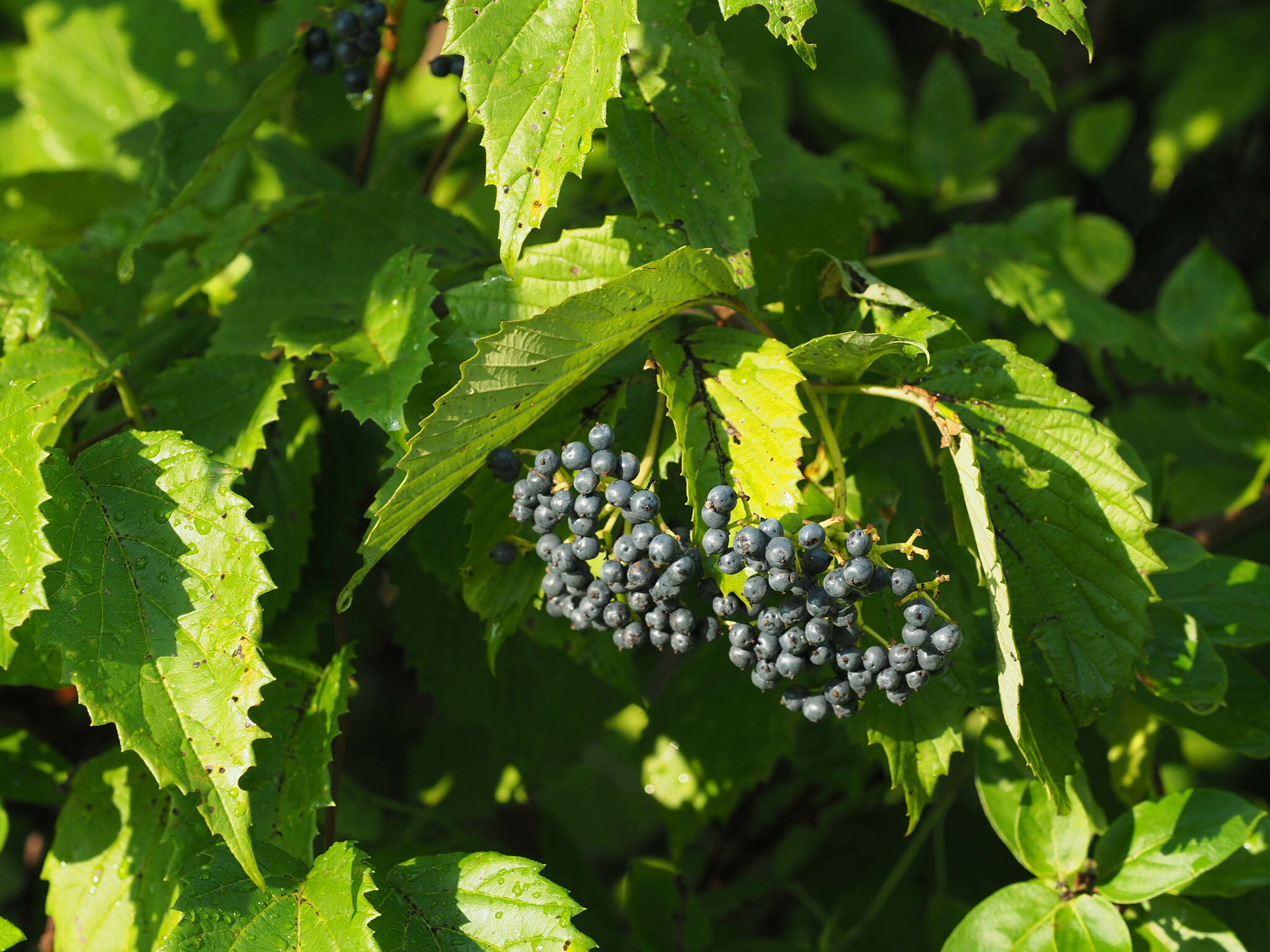 Native Viburnum dentatum (Arrowood)
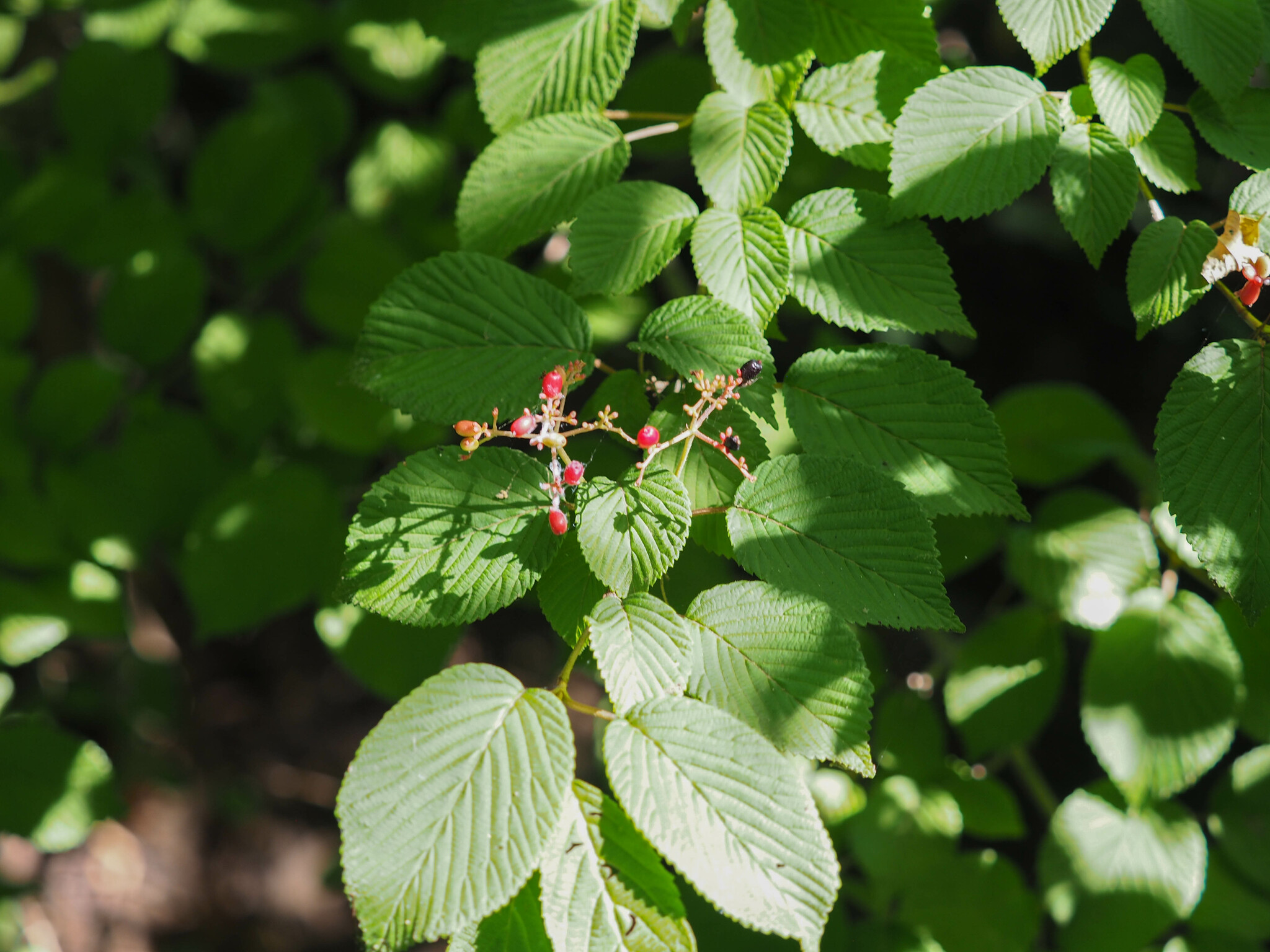 Invasive Viburnum plicatum (Snowball Viburnum)
Methods for identifying plants
Invite an experienced volunteer to help you.
See our Get Help page for details.
Ask a Master Gardener.
Master Gardeners run plant clinics at farmers markets.
Use a plant ID app.
iNaturalist is the app of choice for this. It’s free. Like all apps, the artificial intelligence will take a guess at the identification, but unlike the other apps, it does not pretend that this is the definitive answer and will give you other possibilities to consider. Later, in many cases an actual expert naturalist will review the observation to confirm or change the ID.
However, many invasive plants have native look-alikes, and no app is perfect. The more features you include for the reviewer such as the stems, flowers, and leaves, the better the chance of getting a correct ID from photographs.
Consult respected resources.
- State extension agencies
- Plant NOVA Trees has detailed information about tree-killing vines. https://www.plantnovatrees.org/tree-killing-vines
- Blue Ridge PRISM Virginia Invasive Plant ID & Control Tool. Filter by species or by plant habit (such as vine, tree, etc).
Videos
- Watch videos in English and Spanish on how to identify invasive vines and rescue trees. Fairfax Tree Rescuers - YouTube
- Blue Ridge PRISM
More ID details for some common species
Vines
- Porcelain-berry BRP Fact Sheet BRP short video Part 1 and Part 2
- English Ivy BRP Fact Sheet BRP short video Part 1
- Wintercreeper BRP Fact Sheet BRP Short Video ID
- Japanese and Chinese Wisteria BRP Short Video ID Part 1 and Part 2 and Japanese Priority species in Fairfax Long Island
- Kudzu (Priority species in Fairfax) BRP Fact Sheet
- Five-leaved (Priority species in Fairfax) Alabama Extension
- Mile-a-Minute BRP Fact Sheet
- Japanese Honeysuckle BRP short video ID and Part 2 and Part 3 and Part 4 and Control; BRP Fact Sheet
- Oriental Bittersweet BRP short video ID Part 1 and Part 2 BRP Weed Alert BRP Fact Sheet
Shrubs
- Autumn Olive BRP shot video Part 1 and Part 2 and Part 3 (stump sprouts)
- Bush Honeysuckle BRP Short Video ID Part 1 and Part 2 and Part 3
- Multiflora Rose BRP short video ID and Part 2
- Japanese Barberry BRP short video Part 1
- Burning Bush BRP Weed Alert BRP short video Part 1
- Leatherleaf Mahonia
- Invasive Viburnums Invader Detectives
- Privet BRP Short Video Part 1 and Part 2 and Part 3 Longer video.
- Wineberry BRP Weed Alert BRP short video Part 1